Two architects, a record collection, and a problem with background music.
In 1999, architects Lara Wiesenthal and Adesh Deosaran were spending nights as DJs in New York City's nightlife scene and weekends in record shops hunting for the right songs for their next mixtape. By day, they walked into hotels and shops that played the same uninspiring, numbing background music, music that did nothing for the customer experience and said nothing about the brand.
That gap became Activaire. With the MP3 still new and the major labels still nervous about it, Wiesenthal and Deosaran quietly developed the first license to use MP3 files for commercial background music. They started with a small roster of luxury fashion brands and hotels, hand-curating every program the way an architect designs a space: with intention, structure, and craft.
Twenty-seven years later, the work is the same. The catalogue is bigger. The clients are bigger. The infrastructure is enterprise-grade. But every playlist still gets the same architectural treatment, and every song is still chosen by a human who understands why it belongs.
Music is not background. It's part of the designed environment.
Activaire was founded at the intersection of architecture and music, and that lineage shapes every program we build. A playlist is not a list of songs. It's a sequence of decisions about emotion, energy, narrative, and pace. If a customer waits for the next song, we did our job.
That's why we don't let software make the call alone. An algorithm optimizes for engagement on a personal device. A retail floor, a hotel lobby, a coffee bar at 7am and the same coffee bar at 7pm, those are different rooms with different jobs to do. Our tools help our curators work faster, but only a curator who understands music's relationship to culture, behavior, and the physical space can sequence the right music for each one.
We don't hire curators. We invite them.
There are no job postings. There are no recruiters. Every Activaire curator is hand-selected, often after years of observation. Curation, the way we practice it, isn't a job. It's a way of moving through the world. The people we work with are the kind who can't help but make a playlist for a friend's bar, a stranger's wedding, or a hotel they've never been to. They notice what a room sounds like.
What we look for is a deep knowledge of music history, a finger on emerging trends, and the design instinct to know which songs belong next to each other and which ones don't. Activaire's process is academic in its rigor, rooted in architectural thinking: we reveal the DNA of a brand and design a framework from which playlists are built.
“Curation is about creating a narrative. It's about illustrating values, emotions, and textures. Good storytellers know how to leverage familiarity in combination with curiosity.”
A working history of building the thing.
Activaire has been ahead of the technology curve since the beginning, often building the tools we needed because nothing on the market did the job. The trail of work, in dates.
Activaire founded. First commercial MP3 background music license negotiated.
Featured in The Cult of iPod for early iPod-based deployments in luxury fashion.
Built the first scalable Mac Mini-based playback platform. Named Preferred Music Vendor for Hyatt Hotels.
Released a web app for iPhone, putting playlist control in the hands of hotel general managers.
Migrated the entire content network to cloud delivery.
Introduced the Epicentre, our branded commercial media player.
Native integrations launched for Sonos and Q-SYS, expanding into AV-driven deployments.
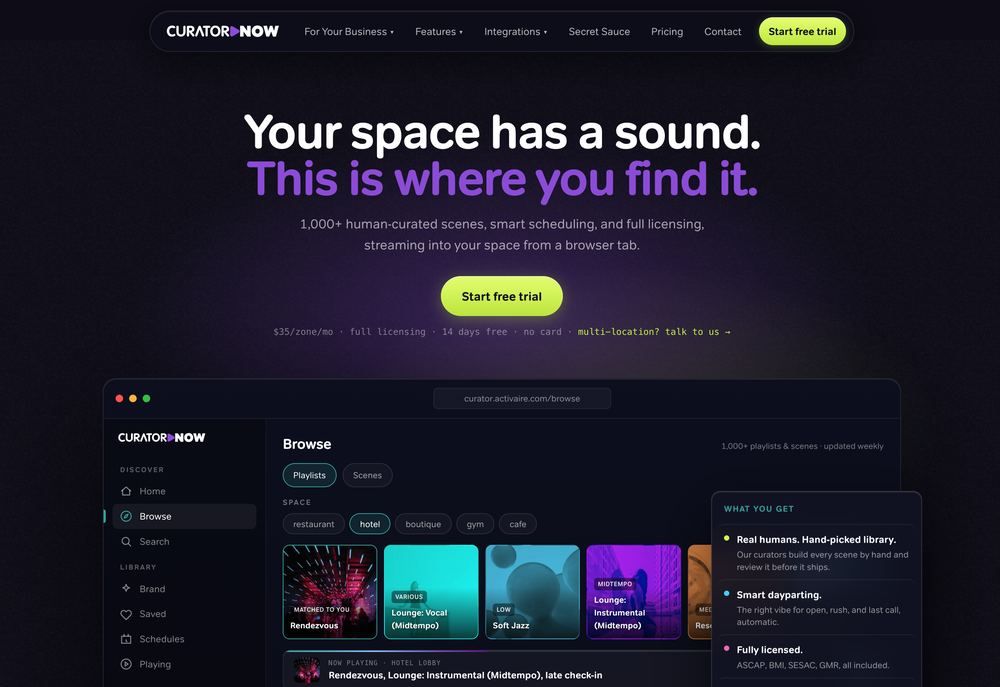
Curator Now becomes Activaire's flagship product, packaging 27 years of work into a self-serve platform.
Twenty-seven years of redesigning ourselves.
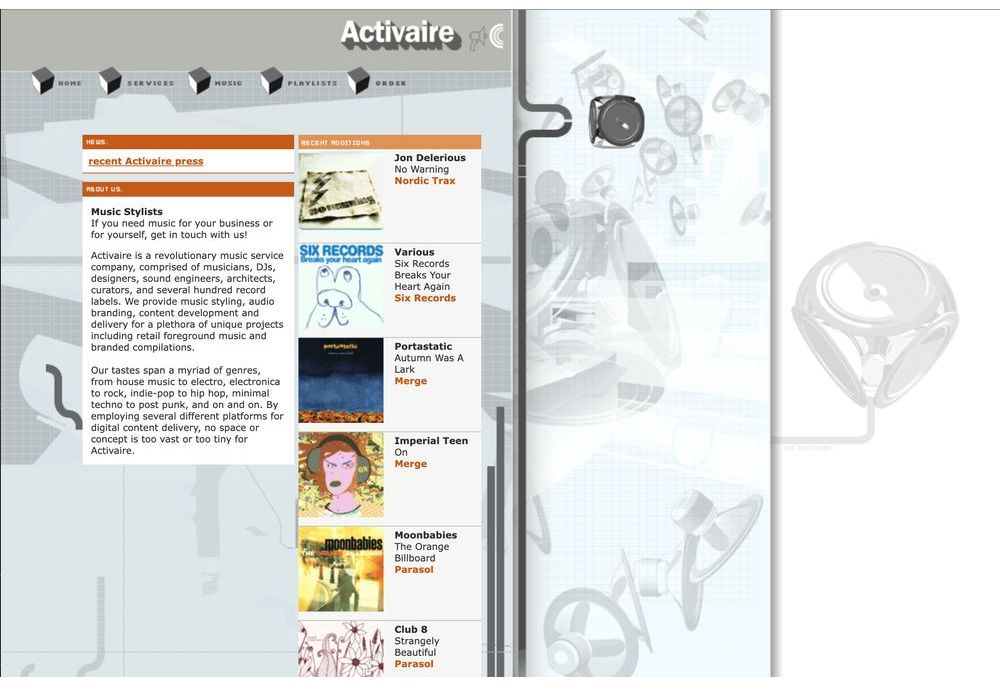
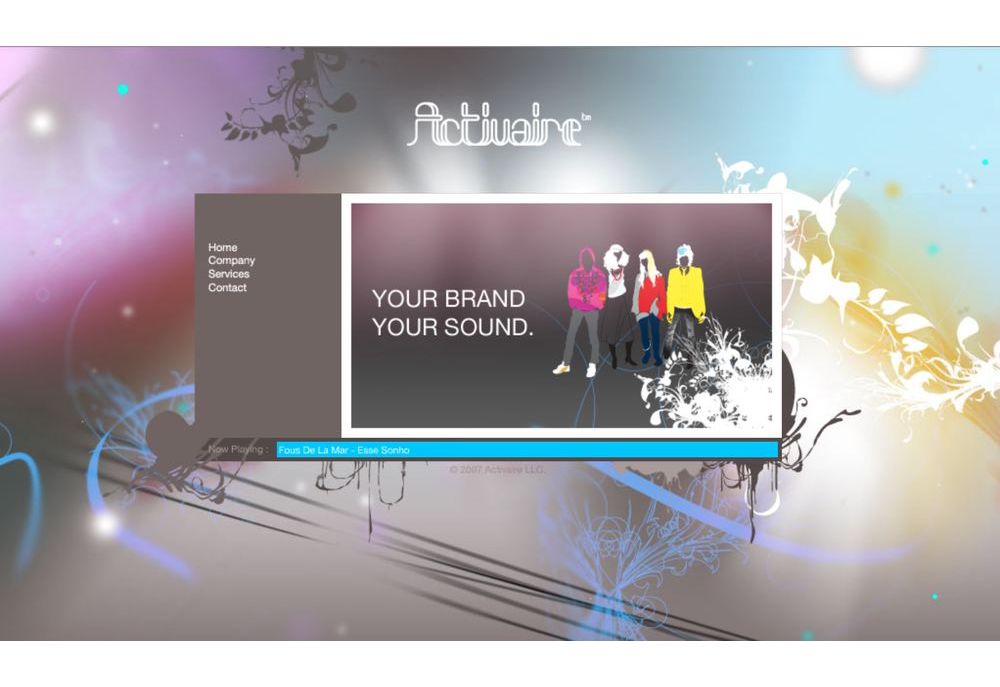
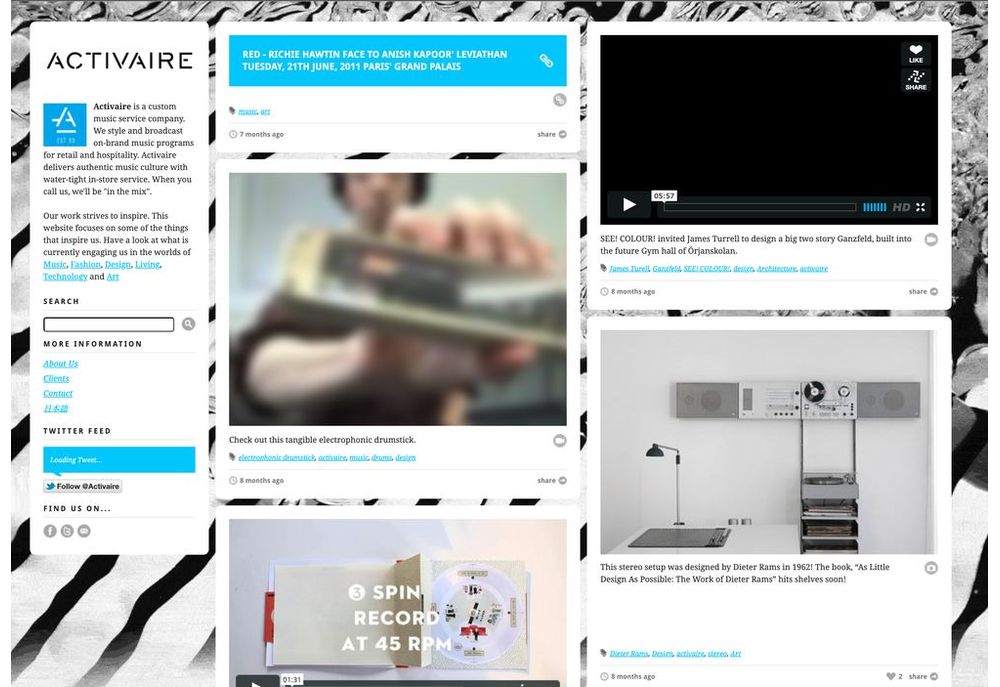
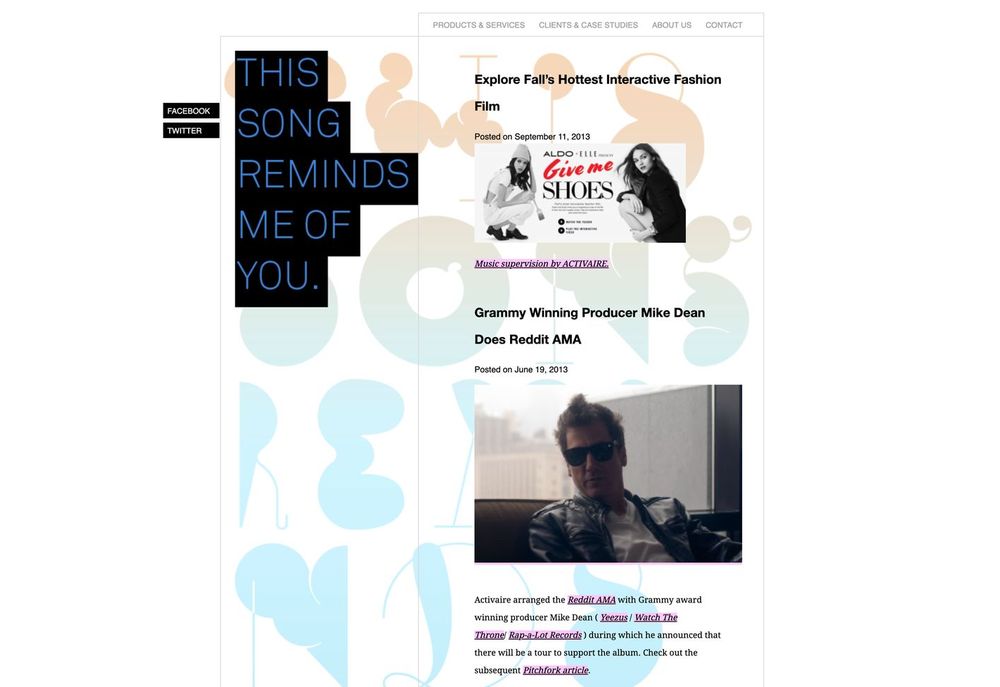
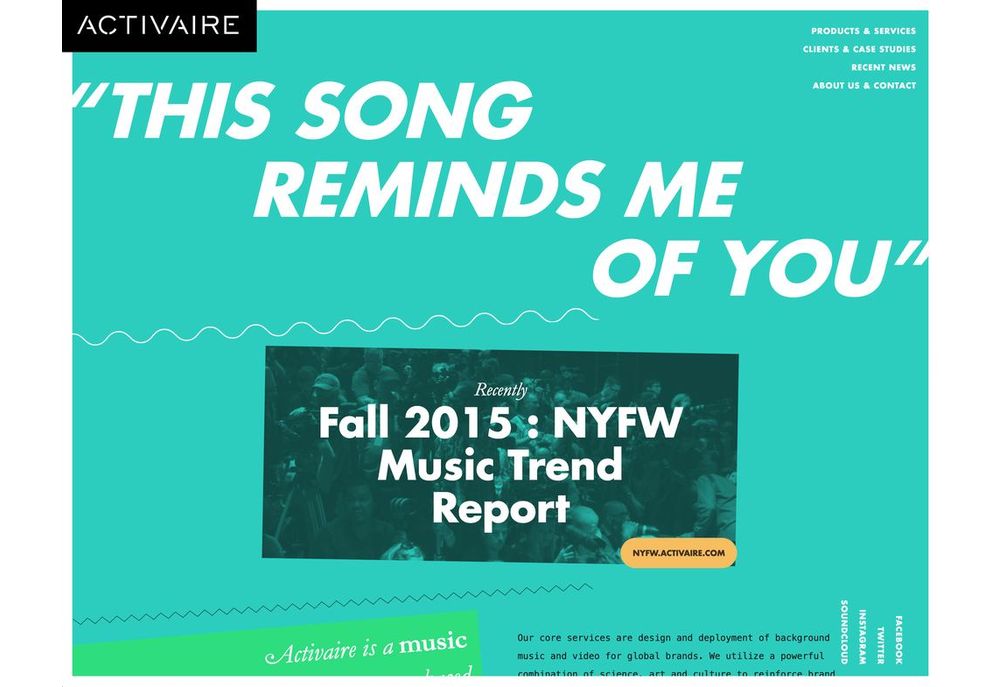
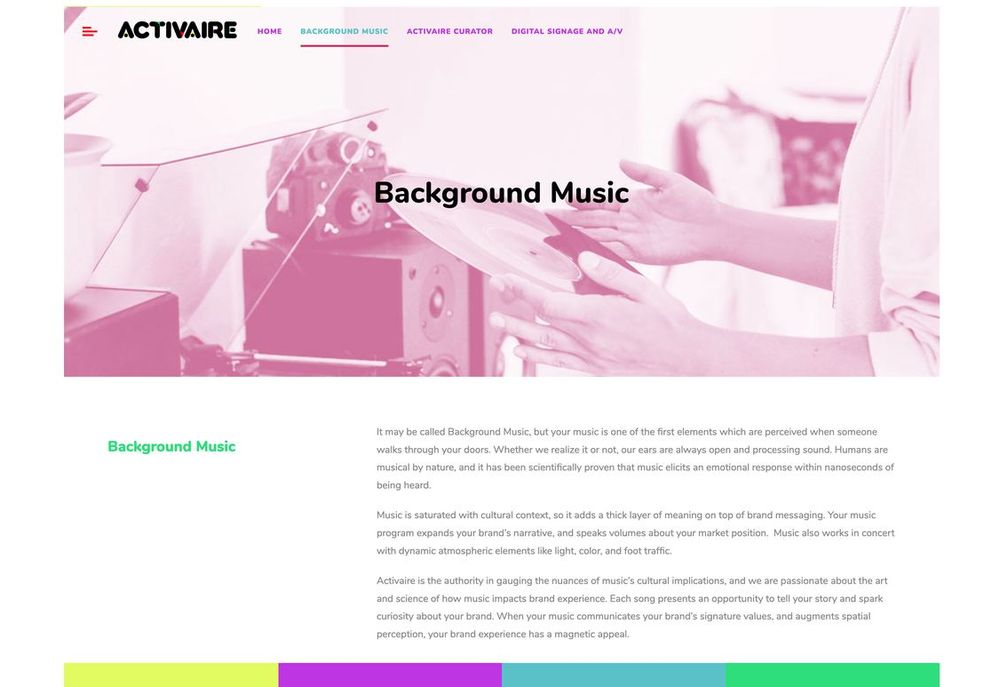
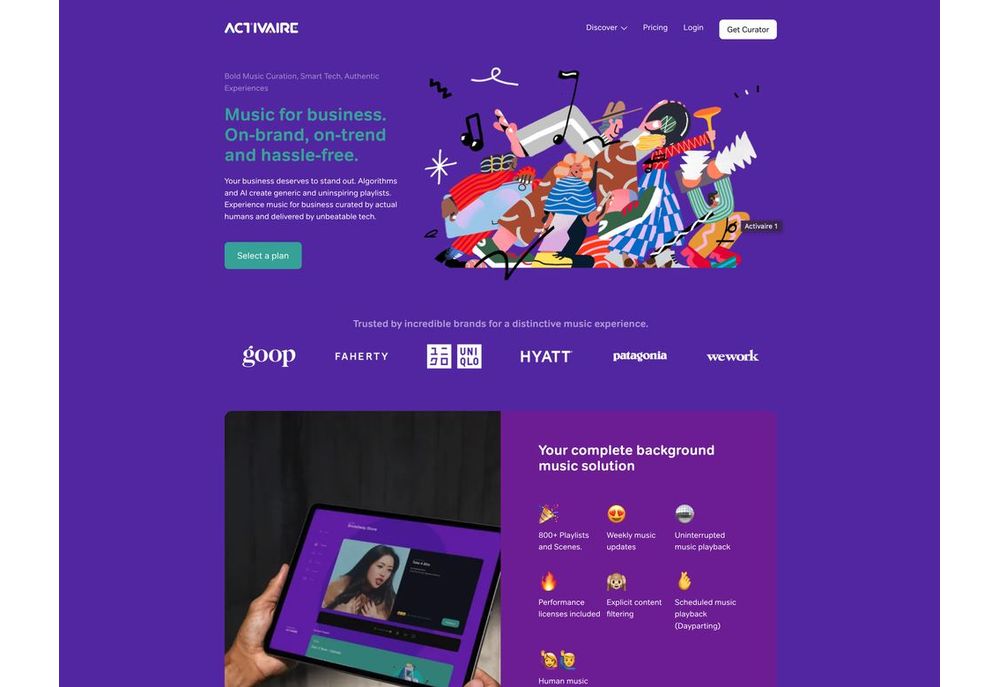
The work has stayed the same. The website has changed more times than we can comfortably admit. A few stops along the way.
Everything we do, packaged as Curator Now.
Today, the entire Activaire practice runs through one product: Curator Now. It's the same human curation, the same architectural process, the same enterprise-grade infrastructure, available as a self-serve platform that scales from a single coffee bar to a global hotel portfolio.
Curator Now includes hand-built scene libraries, smart dayparting, multi-zone control, full ASCAP, BMI, SESAC, and GMR licensing in the US and Canada, and native support for browser, Sonos, Q-SYS, and our own Epicentre hardware. It runs on a subscription priced by zone, from independent operators to multi-location enterprise rollouts.








Hear what 27 years of listening sounds like.
Curator Now is the product. Activaire is the studio. Either way, the music's the same.