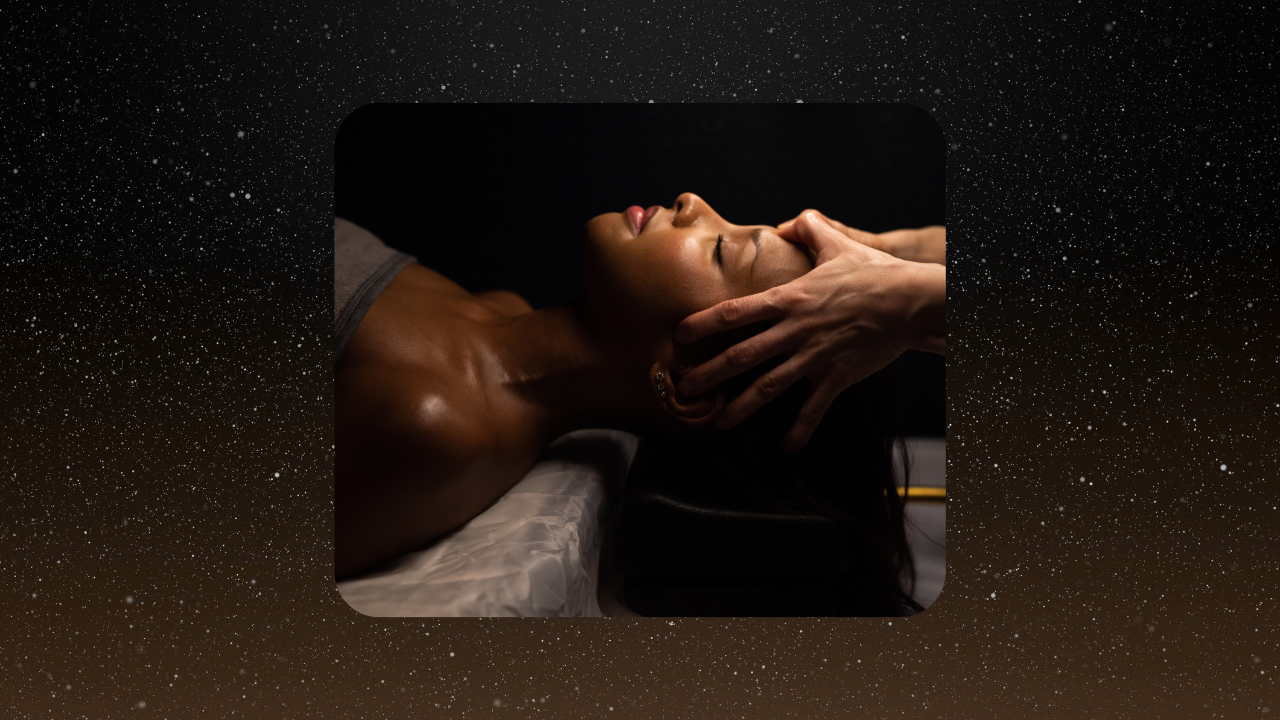
A day spa is the one commercial environment where music is not supporting an experience, it is part of the therapy. The physiological goal of a massage, a facial, or a body treatment is parasympathetic nervous system activation: lower heart rate, reduced cortisol, slower breathing, the measurable unwinding of stress from the body. Music, chosen correctly, accelerates that process. Chosen incorrectly, it competes with it. Most spa operators understand this instinctively but have not examined the research closely enough to know precisely what "chosen correctly" means. This post covers what the science actually says.
The relaxation response is triggered most reliably by music below 60 BPM, without strong rhythmic pulse, without lyrics, and at volumes low enough that the music functions as texture rather than content. These are not aesthetic preferences, they are the conditions under which music can entrain heart rate and respiratory pace downward. Everything above those thresholds reduces the therapeutic effect.
What Does Relaxation Science Actually Say?
The most rigorous summary of music and relaxation research comes from Bradt and Dileo, whose Cochrane systematic review (2009) examined music interventions for stress and anxiety reduction across clinical and wellness settings. The findings were consistent: music significantly reduces self-reported anxiety, physiological heart rate, respiratory rate, and blood pressure compared to no-music controls. The effect was strongest when the music was slow, predictable, and non-lyrical.
The mechanism is called tempo entrainment. The autonomic nervous system, which governs heart rate, breathing, and cortisol production, responds to external rhythmic stimuli by gradually synchronizing with them. Music at 50 to 60 BPM, sustained over five to ten minutes, can measurably slow heart rate and respiratory pace in a resting individual. Music above 80 BPM sustains or increases arousal rather than reducing it. This is not a subtle effect; it is the difference between music that is doing therapeutic work and music that is simply ambient.
Two additional findings from the research are directly relevant to spa programming. First, music without strong dynamic variation, without sudden volume swells, percussive peaks, or dramatic harmonic shifts, produces a more stable relaxation response than music with high dynamic contrast. The nervous system reads unpredictable sonic events as potential threat signals, which interrupts parasympathetic activation. Second, unfamiliar music produces deeper relaxation than highly familiar music in many individuals, because familiar songs activate memory, emotional association, and internal narrative, all of which engage the mind rather than allowing it to rest.
How Do You Program Each Zone of a Spa?
A spa has multiple acoustic environments within the same building, and each zone represents a different moment in the client's experience arc. The music should deepen the relaxation response progressively from arrival to treatment, then ease the return to alertness on the way out.
| Zone | BPM Range | Volume Target | Programming Notes |
|---|---|---|---|
| Reception / Arrival | 72 – 88 BPM | 60 – 66 dB | Begins the descent, warm, calm, but still functional for conversation and check-in |
| Relaxation Lounge | 58 – 72 BPM | 55 – 62 dB | Pre-treatment waiting, the nervous system shift begins here in earnest |
| Treatment Rooms | 45 – 62 BPM | 48 – 56 dB | Deepest relaxation target, ambient, no pulse, no lyrics, no dynamic peaks |
| Steam / Sauna / Hydrotherapy | 48 – 65 BPM | 50 – 58 dB | Similar to treatment rooms, heat already stresses the body; music must not add to it |
| Locker Room / Exit | 68 – 80 BPM | 55 – 62 dB | Gentle re-entry, slightly more presence as clients return to the world, but no jarring shift |
The progression from 88 BPM at reception to 45 to 62 BPM in the treatment room mirrors what the body is doing: arriving activated and descending into stillness. The locker room's slight increase on the way out mirrors the reverse: easing clients back toward functional alertness without the music doing the work abruptly. A client who walks out of a 60-minute massage into 95 BPM music will feel the contrast as a jolt rather than a transition.
Why the Treatment Room Requires Different Programming from Every Other Zone
In every other commercial environment discussed in this series, the music is competing with, or complementing, ambient activity. The treatment room is unique: it is a controlled acoustic environment with one client, one therapist, minimal ambient noise, and a person who is physically prone and often in a state of deep rest. The music is the primary sensory input in the room beyond touch.
This makes the stakes for every programming choice higher. A dynamic swell that would be unnoticeable on a busy restaurant floor is a significant event in a quiet treatment room. A track with a strong rhythmic kick that would blend into a gym environment is a direct counter-signal to the parasympathetic response the massage is trying to produce. The absence of rhythm is not a genre preference in a treatment room, it is a clinical requirement.
Volume calibration in a treatment room also needs to account for something that other environments do not: the therapist's movement, the sound of the treatment itself (oils, fabric, breathing), and the fact that the client's ears are often partially occluded by the table face rest or by positioning. The music needs to be audible to a client in that position without being loud in the room. This typically means positioning speakers in the ceiling or high on the walls, aimed at the table rather than the room in general, and calibrating at the table level rather than at the door.
Nature Sounds vs. Music: What the Research Shows
Nature sounds, rainfall, streams, forest ambience, ocean, are widely used in spa settings, and the research supports their effectiveness. Multiple studies have found that natural soundscapes reduce cortisol levels and subjective anxiety scores comparably to slow instrumental music, and in some populations produce slightly faster relaxation onset. The likely mechanism is evolutionary: natural soundscapes containing water and wind but no human voices or mechanical sounds signal environmental safety to the nervous system, which facilitates parasympathetic activation.
The practical application is that nature sounds are not a substitute for music in a spa, they are an additional tool in the same toolkit. A treatment room program that layers very gentle ambient music under a soft rain or water soundscape often produces a richer and more consistent relaxation environment than either element alone. The layering requires careful volume balancing: the nature sound should be present but not dominant, and the music underneath should be slow enough that it does not create rhythmic contrast with the irregular patterns of natural sound.
What does not work well: looping nature sounds on short cycles. A rain loop that repeats every 90 seconds becomes audible and distracting for a client in a long treatment once their nervous system has quieted enough to notice repetition. A client who is genuinely relaxed has heightened sensitivity to environmental changes, which is the opposite of what you want when running a 24-second loop for 90 minutes.
Volume: The Most Common Calibration Error in Spa Programming
The most consistent mistake we encounter when working with spa operators is music that is too loud in treatment rooms. The instinct is that quiet music might not be "doing anything", that the client needs to hear it clearly for it to produce a therapeutic effect. The research does not support this. Music at 48 to 56 dB in a quiet room is clearly audible to a prone client. Music at 65 dB in the same room is a competing stimulus rather than a supporting one.
The standard we use: if you can have a normal-volume conversation in the treatment room without effort while the music is playing, the music is too loud. Therapists should be able to ask a quiet question and receive a quiet answer without either party raising their voice. Below that threshold, the music is functioning as intended, present, supportive, and receding.
A Note on Licensing
Day spas are commercial spaces and require a public performance license for music played in any area where clients are present, reception, treatment rooms, relaxation lounges, locker rooms, and all shared spaces. Consumer streaming services do not include this license. The risk in spa settings is not hypothetical: the same performing rights organizations that audit restaurants and gyms audit wellness businesses. A commercial music service designed for wellness environments handles licensing and typically provides the kind of slow, ambient, and nature-integrated programming that serves a spa context far better than consumer streaming defaults.
Frequently Asked Questions
Is there a specific BPM that produces the strongest relaxation response?
The research points consistently toward music in the 50 to 60 BPM range as the most effective for inducing parasympathetic activation in a resting individual. This range is close to average resting heart rate, which facilitates entrainment, the gradual synchronization of autonomic function with the musical pulse. Below 50 BPM, music can feel too slow to be processed as organized sound rather than random ambient texture, which may reduce its effectiveness as an intentional stimulus. Above 65 BPM, the entrainment effect weakens, though the music may still be pleasant and non-disruptive. For treatment room programming, 52 to 60 BPM is the target range.
Should each treatment room have individual music control?
Ideally, yes. Therapists have different pacing, different client relationships, and handle different service types across a single day. A therapist moving from a 90-minute deep tissue massage to a 30-minute express facial may want different programming for each, and a client with specific sensitivities (aversion to nature sounds, discomfort with very slow music) should be accommodated at the room level. Individual room control through a centralized platform, where each room has its own zone but the programming library is shared, gives therapists meaningful autonomy without creating a situation where every room is running a different consumer streaming account.
What do you do about a client who asks for different music?
Accommodate it graciously. A client who asks for silence, or for a specific type of music, or for something different from the standard program is telling you something important about what helps them relax. The therapeutic goal of the treatment takes priority over programming consistency. Keeping a short list of alternative options that therapists can offer, a nature sound alternative, a classical option, near-silence, allows for personalization without requiring ad hoc decisions that might result in genuinely unhelpful choices (like a client's personal Spotify account, which almost certainly has faster, more arousing music than what a spa should be playing).
How do you handle music in a spa that also has a fitness facility or salon?
Zone control is essential, and the acoustic separation between zones is as important as the programming separation. A fitness area running 120 BPM at 80 dB adjacent to a treatment corridor at 55 BPM and 52 dB will bleed sound through shared walls regardless of what the zone settings say. Physical acoustic treatment, insulation, solid-core doors, acoustic panels in shared walls, is infrastructure investment that no music system can replace. When physical separation is not possible, the spa zones should be positioned as far from active fitness areas as the floor plan allows, and the fitness programming should be calibrated to prevent bleed at the spa corridor level.
Are Tibetan singing bowls, binaural beats, or sound bath recordings appropriate for spa use?
Yes, and in many spa contexts they are highly appropriate, particularly for treatment rooms serving clients seeking a more explicitly wellness-oriented or meditative experience. Binaural beats, which require headphones to produce their full neurological effect, are most useful in settings where clients are using individual audio. In a shared room, the beat frequencies are inaudible without headphones, so the tracks function essentially as slow ambient music. Singing bowl recordings and sound bath audio are effective ambient tools when they do not include aggressive dynamic peaks or extended silences that feel abrupt. The same principles apply: slow, continuous, non-lyrical, low volume.
Should spa music change by season or time of day?
Seasonal variation is valuable and underused in spa programming. The sensory environment of a spa visit in winter, when clients are arriving from cold, from stress, from compressed daylight, calls for warmer, slightly more enveloping music than a summer program, where the natural world is already providing ease and light. Autumn programs can lean into earthier, more organic textures; spring programs toward something slightly more open and airy. These are subtle shifts, 5 to 8 BPM, a shift in genre toward or away from nature sounds, but regular clients notice them, and they signal that the operator is paying attention to the full sensory experience rather than setting a program and forgetting it.
Bradt, J., & Dileo, C. (2009). Music for stress and anxiety reduction in coronary heart disease patients. Cochrane Database of Systematic Reviews, Issue 2.
Milliman, R. E. (1982). Using background music to affect the behavior of supermarket shoppers. Journal of Marketing, 46(3), 86–91.