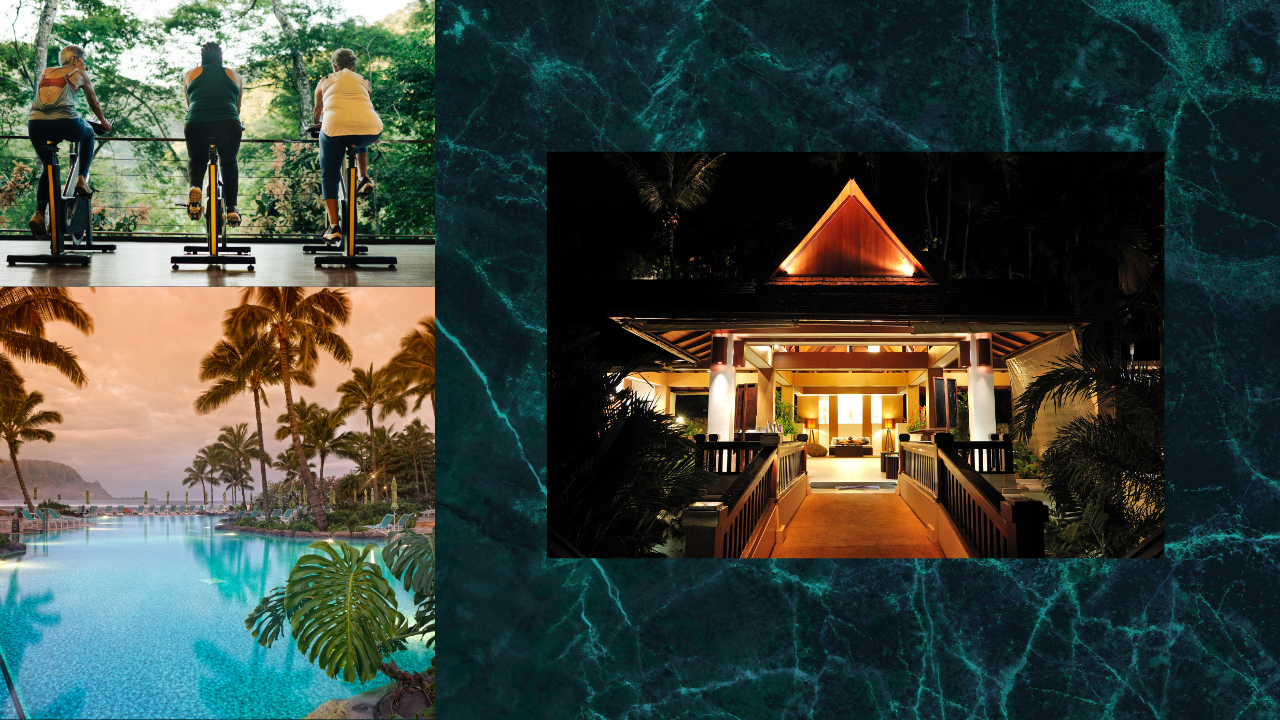
A full-service hotel is not one commercial space. It is eight to twelve distinct acoustic environments operating simultaneously, each serving a different guest behavioral mode, each requiring different programming, and all of them needing to feel like they belong to the same property. The lobby at check-in, the spa in the basement, the rooftop pool at sunset, and the gym at 6 a.m. are each doing completely different sonic work. The failure mode is not any single zone getting the programming wrong. It is all the zones getting it slightly wrong in different directions, producing a property that feels acoustically incoherent even when guests cannot articulate why.
Multi-zone hotel music is a systems problem, not a playlist problem. Each zone needs programming matched to its function. All zones need to share a sonic identity that makes the property feel like a coherent brand. And the transitions between zones, the corridor between the spa and the lobby, the elevator from the gym floor to the restaurant, need to be managed, not ignored.
Why Zone Coherence Matters More Than Any Single Zone
A guest who checks into a property does not experience it zone by zone in isolation. They move through it, from lobby to elevator, elevator to corridor, corridor to restaurant, restaurant to spa. Each transition is a moment where the property either holds together or reveals a seam. A lobby with beautifully curated contemporary jazz adjacent to a spa playing generic nature sounds adjacent to a restaurant running unrelated pop radio produces an experience that feels like three different businesses sharing a building, not a hotel with a point of view.
The concept we use is a brand throughline: a genre family or sonic palette that is consistent enough across all zones to feel intentional, flexible enough to accommodate the tempo and energy differences each zone requires. A luxury urban property might anchor its throughline in contemporary jazz and acoustic electronic across all zones, relaxed and slow in the spa, slightly more present in the lobby, more rhythmically active in the restaurant, with each zone drawing from the same palette at different settings. A guest moving through the property hears variation, not randomness.
Research by North, Hargreaves, and McKendrick, published in the Journal of Applied Psychology (1999), established that music shapes perceived quality of an environment. In a multi-zone hotel, this effect compounds: a guest whose perception of quality is consistently reinforced across six different spaces forms a stronger and more durable brand impression than one whose experience of quality is inconsistent across zones. The music is doing brand work continuously, whether the operator is managing it or not.
The Five Core Zones and What Each One Needs
| Zone | BPM Range | Volume | Function | Programming Priority |
|---|---|---|---|---|
| Lobby | 80 – 108 BPM | 62 – 70 dB | First impression, brand statement, transit hub | Property type match; dayparted morning to evening |
| Restaurant / F&B | 85 – 118 BPM | 64 – 72 dB | Revenue generation, dwell, beverage sales | Dayparted lunch vs. dinner; tempo drives table turn or yield |
| Spa / Wellness | 45 – 75 BPM | 48 – 62 dB | Parasympathetic activation, therapeutic depth | Deepest relaxation in treatment rooms; progressive zones from reception inward |
| Pool / Outdoor | 88 – 112 BPM | 68 – 78 dB | Leisure, social atmosphere, destination feel | Contextual to property type and geography; transitions morning to evening |
| Fitness Center | 95 – 135 BPM | 72 – 82 dB | Exercise performance, arousal, energy | Zone-specific if multi-zone gym; otherwise single high-energy program |
Pool and Outdoor Programming: The Underbuilt Zone
Pool and outdoor areas receive less programming attention than any other hotel zone, and they are among the most experientially significant for leisure guests. A guest who spends three hours at a pool is forming their strongest sensory memory of the property during that time, and most hotel pools are running either silence, a radio feed, or a consumer streaming account with no acoustic calibration for an outdoor environment.
Outdoor acoustics present specific challenges. High frequencies disperse quickly in open air, reducing the presence of instruments like piano and acoustic guitar that work well indoors. Bass frequencies carry further but can become boomy with poor speaker placement. The practical result is that outdoor pool programming benefits from music with strong mid-range presence, moderate tempo, and enough rhythmic drive to cut through ambient sound, wind, water, activity, without needing to be loud.
Pool programming should also track the day. Morning (opening to noon) is typically occupied by early risers and fitness-oriented guests, slightly more energetic programming at 95 to 105 BPM is appropriate. Midday through mid-afternoon is peak leisure time, where the property's signature sound should be most present and social. Sunset and evening programming should shift toward something warmer and more atmospheric, if the property has a pool bar, this is when the music needs to support its activation rather than the general pool experience.
How Do Adjacent Zones Stay Coherent?
The transition spaces between zones, corridors, elevators, lobby-to-restaurant thresholds, are where zone coherence is most visible and most often neglected. A corridor that is silent between a jazz-programmed lobby and an electronic-programmed restaurant creates a perceptible seam. An elevator running the same mid-tempo acoustic program regardless of which floor it opens onto is a missed opportunity to prepare guests for the zone they are about to enter.
Our approach to transition spaces uses what we call a gradient rule: each transition zone should sit between the programming of the zones it connects, not alongside them. A corridor connecting the lobby (90 BPM) to the spa (60 BPM) should run at approximately 72 to 78 BPM, already signaling the shift, not abruptly changing it. This requires the corridor to be its own programmed zone rather than an extension of either adjacent zone.
Elevators in full-service hotels are often programmed from a central system with no zone differentiation. The minimum viable improvement is programming them at a neutral mid-tempo (80 to 90 BPM) that does not clash with whatever zone the guest is traveling to or from. The higher-quality solution is elevator programming that shifts based on what floor is currently serving as the destination, spa floor, restaurant floor, gym floor, which is achievable with modern zone-control platforms and well worth the setup investment at a property where these zones have meaningfully different programming.
What Does the Whole Property Sound Like at Different Times of Day?
A multi-zone hotel has a daily arc just as any single commercial space does, but the arc is more complex because multiple zones are shifting simultaneously and not always in the same direction. A property that is getting dayparting right will feel different at 7 a.m., 12 p.m., 6 p.m., and 10 p.m., not just in one zone, but across the entire guest experience.
| Time Window | Lobby | Restaurant | Spa | Pool | Gym |
|---|---|---|---|---|---|
| Morning (6–10 a.m.) | Calm energy, 85–95 BPM | Breakfast pace, 95–108 BPM | Opening calm, 58–70 BPM | Peaceful, 80–92 BPM | Peak performance, 110–130 BPM |
| Midday (10 a.m.–3 p.m.) | Full program, 88–105 BPM | Lunch turn, 102–115 BPM | Steady deep, 48–65 BPM | Peak social, 95–110 BPM | Sustained drive, 112–128 BPM |
| Evening (5–10 p.m.) | Warmer, slower, 82–96 BPM | Dinner dwell, 82–100 BPM | Late calm, 48–62 BPM | Sunset/bar shift, 88–105 BPM | After-work energy, 110–125 BPM |
| Late Night (10 p.m.+) | Quiet minimal, 70–82 BPM | Bar-driven or closing, varies | If open: deepest program | If open: intimate/bar energy | If open: low, sustained |
The Operational Infrastructure Question
Managing five or more independently programmed zones, each with its own daypart schedule, volume calibration, and content library, is not achievable through consumer streaming accounts managed manually by different staff members in different departments. It requires a centralized platform with zone-level control, schedule automation, and a single administrative interface.
The practical requirements for a full-service hotel music system are: independent audio zones per space, schedule-based automation for daypart transitions, remote management capability for the property's music director or operator, local override for staff in guest-facing roles, and content that is already licensed for public performance. Consumer platforms fail on the last two criteria regardless of how they handle the first three. A commercial music service purpose-built for hospitality handles all five.
The business case is straightforward: the labor cost of manually managing music across five zones, changing programs, adjusting volumes, handling transitions, across a seven-day operation at a full-service hotel is significant. Automation that handles transitions on schedule removes that labor cost while producing more consistent results than manual management achieves.
A Note on Licensing
Every guest-facing space in a hotel requires a public performance license. This includes the lobby, restaurant, spa, pool deck, fitness center, corridors, and any other area where guests may hear music played over a speaker system. In-room entertainment is subject to different licensing arrangements. A commercial music service typically covers all public performance areas under a single property subscription, a significant simplification over the alternative of managing separate ASCAP, BMI, and SESAC licenses for each zone individually.
Frequently Asked Questions
How many separate audio zones does a full-service hotel typically need?
At minimum, five: lobby, restaurant, spa, pool, and fitness center. In practice, most full-service properties benefit from eight to twelve zones once you account for lobby bar (different from transit lobby), corridors, elevators, event spaces, rooftop areas, and the distinction between spa treatment rooms and spa common areas. The zone count should be driven by the functional diversity of the spaces, not by a desire to minimize complexity. Under-zoning produces the acoustic seam problem; over-zoning creates management overhead that most operators cannot sustain.
Should the hotel brand or the individual outlet manage the music in a hotel restaurant?
This is a genuinely contested question in full-service hospitality. Hotel brands with strong sonic identity programs tend to centralize control to protect brand consistency. Hotel restaurants with their own identity, particularly those with celebrity chefs or strong independent positioning, benefit from music that reflects the restaurant's own brand rather than defaulting to the hotel's. The workable resolution in most cases is that the hotel establishes the brand throughline (the genre palette) and the restaurant operates within it, with latitude on the specific playlist and daypart choices. This preserves identity without creating disconnection.
What happens when a hotel hosts a large event that temporarily transforms a zone?
Events, weddings, conferences, corporate buyouts, temporarily override the standard zone programming for their duration. A good multi-zone system allows event-specific presets to be activated and deactivated without disrupting adjacent zone programming. The practical requirement is that the event space be a distinct audio zone from adjacent areas, so a wedding reception at 105 BPM in the ballroom does not bleed into a spa corridor at 60 BPM. This is partly an acoustic design question (physical separation, door seals, room construction) and partly a zone management one.
How do you handle a pool that is shared between hotel guests and day visitors?
The programming logic does not change based on guest origin, hotel guests and day visitors in the same pool space want the same acoustic environment. The operational difference is that day visitors may arrive at different times than hotel guests and may have different behavioral patterns. If the pool has a meaningful day-visitor business during weekday afternoons, the midday programming should be calibrated for a mixed and active pool environment rather than assuming the quieter patterns of hotel guests enjoying a post-checkout afternoon swim.
Can the spa music bleed into the gym if they share a floor?
This is a common architectural problem in urban full-service hotels where space is constrained and wellness facilities are stacked on the same floor. The acoustic contrast between spa programming (50 BPM, 52 dB) and fitness programming (120 BPM, 78 dB) is extreme, and bleed in either direction is damaging to both zones. Physical acoustic treatment, solid-core doors, insulated walls, ceiling buffers, is the only real solution. Music system calibration can minimize the problem at the margins but cannot solve a construction issue. When these zones must share a floor, the corridor between them should be its own programmed zone, and the doors to each space should be heavy enough to function as acoustic seals.
What is the ROI case for investing in a proper multi-zone music system?
The measurable returns come from three areas. First, F&B revenue: dayparted restaurant programming has documented effects on table turn at lunch and beverage sales at dinner, both direct revenue outcomes. Second, spa yield: guests who experience deeper relaxation during treatments report higher satisfaction, are more likely to rebook, and are more likely to purchase retail products at checkout. Third, brand perception: properties with coherent, high-quality sonic environments score higher on overall satisfaction metrics in post-stay surveys, which affects both direct rebooking rates and review platform scores. The investment in a professional multi-zone system is recoverable through any one of these channels; in a full-service hotel, all three are operating simultaneously.
North, A. C., Hargreaves, D. J., & McKendrick, J. (1999). The influence of in-store music on wine selections. Journal of Applied Psychology, 84(2), 271–276.
Milliman, R. E. (1982). Using background music to affect the behavior of supermarket shoppers. Journal of Marketing, 46(3), 86–91.
Bradt, J., & Dileo, C. (2009). Music for stress and anxiety reduction in coronary heart disease patients. Cochrane Database of Systematic Reviews, Issue 2.