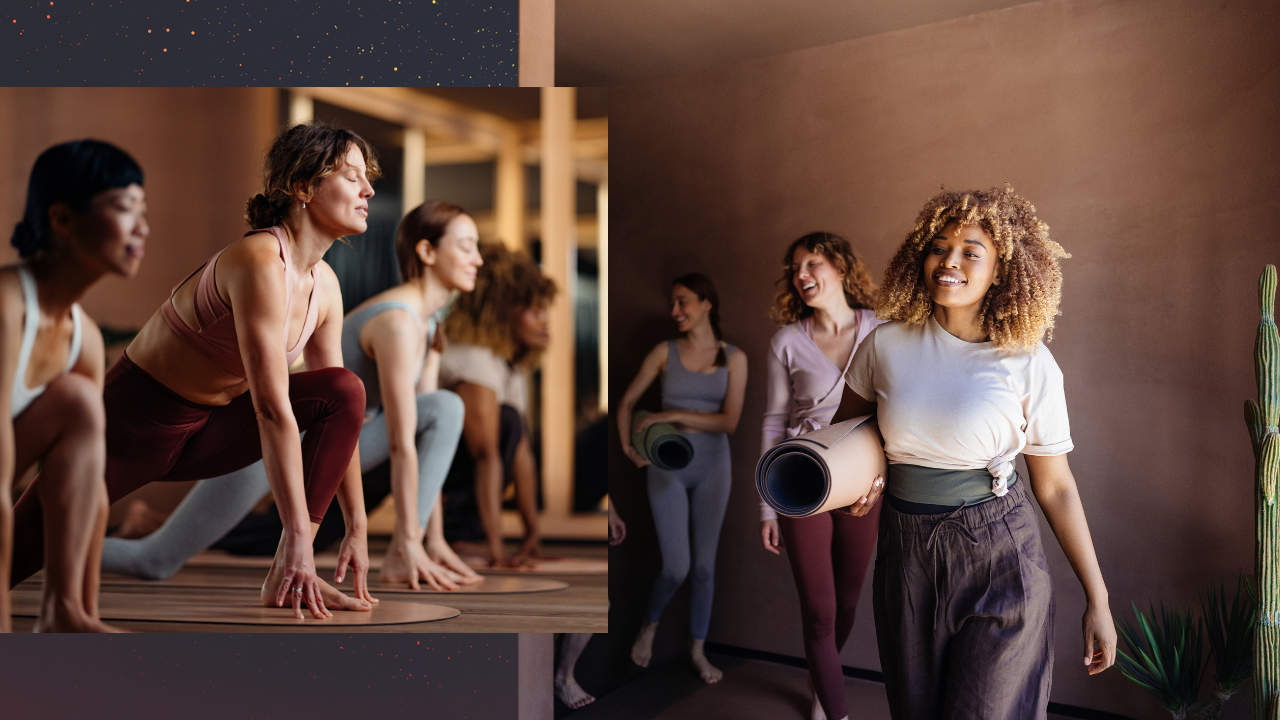
Music in a yoga studio is doing something different from music in any other fitness environment. In a gym, the goal is arousal, driving effort, pushing through fatigue. In a yoga class, the goal is regulation: helping the nervous system shift states, move through intensity without bracing against it, and arrive at stillness. That difference changes everything about how you program. The wrong music in a gym costs you some performance output. The wrong music in a yoga class can undo the entire therapeutic arc of a 60-minute session in the last five minutes.
Class type is the primary programming variable in a yoga studio, more so than in almost any other fitness context. Yin yoga and power flow are not variations of the same experience; they are opposite neurological states requiring opposite sonic environments. A studio offering both from the same room needs class-specific playlists, not a single house sound.
Why Yoga Music Is Different from Other Fitness Programming
Most fitness environments use music to push the body harder. Yoga, at its foundation, uses the body as a tool to regulate the nervous system, and music, played at the right volume and tempo, either supports or disrupts that process. This is not just philosophy. Research by Bradt and Dileo, published in the Cochrane Database of Systematic Reviews (2009), demonstrated that music significantly reduces physiological markers of stress and anxiety. The mechanism, slowed breathing, reduced heart rate, lowered cortisol, is the same mechanism that yoga itself targets. When the music and the practice are aligned, they compound each other. When they are misaligned, the music actively works against the parasympathetic response the class is trying to produce.
The second distinction is that the instructor's voice is the primary sound in a yoga room. Every other fitness format, spin, HIIT, barre, positions the music as the primary driver with the instructor layered over it. In yoga, the cue is the driver. The music supports the cue; it never competes with it. This means yoga music needs to occupy a different acoustic position in the room: present enough to create atmosphere, quiet enough that a spoken instruction at normal conversational volume is always clearly audible without the instructor needing to project.
How Does Class Type Define the Sonic Environment?
Every yoga class type represents a different target nervous system state. The music should be calibrated to support that state, which produces dramatically different programming across the class menu of a typical multi-format studio.
| Class Type | BPM Range | Volume Target | Genre Approach |
|---|---|---|---|
| Yin / Restorative | 40 – 62 BPM | 52 – 60 dB | Deep ambient, drone, soundscapes, solo piano, music without a defined pulse |
| Hatha / Gentle | 62 – 80 BPM | 58 – 65 dB | Acoustic, soft world music, gentle ambient, warm and unhurried |
| Vinyasa / Flow | 78 – 100 BPM | 62 – 70 dB | Ambient electronic, world fusion, acoustic pop, should move without driving |
| Power Flow / Power Yoga | 92 – 115 BPM | 66 – 74 dB | Indie, contemporary electronic, neo-soul, more driving but never aggressive |
| Hot Yoga | 80 – 105 BPM | 62 – 70 dB | Instructor-dependent; generally moderate tempo with warmth |
| Kundalini | Mantra-based | 60 – 68 dB | Devotional and kirtan music, this tradition has its own distinct musical culture |
Ashtanga yoga is a notable omission from this table. Traditional Ashtanga is practiced in silence or near-silence, the ujjayi breath of the practitioner is itself the sound. Studios offering Ashtanga alongside other formats should treat those rooms as a separate acoustic environment where the house music system is either off or running at barely perceptible levels during class.
How Should the Music Move Through a Single Class?
A yoga class is a structured arc with a beginning, a peak, and a landing, and the music should trace that arc rather than hold a single energy level throughout. The specific shape of the arc varies by class type, but the pattern is consistent: start slightly below the class's target energy, build through the active portion, and descend deliberately toward stillness at the end.
For a 60-minute vinyasa class, this might look like: a calm, low-tempo opening during centering and breath work (BPM 70–80, volume low); a gradual build through sun salutations (BPM 85–95, volume slightly elevated); a sustained peak through standing sequences and arm balances (BPM 88–100, volume at class target); a deliberate drop through floor work and twists (BPM 75–85, volume dropping); and a full landing into savasana (BPM 50 or below, volume minimal).
The transitions between these phases matter as much as the phases themselves. A jarring track change during a long hold pulls students out of the internal focus the pose is building. Smooth transitions, tracks that end gently, crossfades that are barely perceptible, or ambient tracks that contain their own internal shifts, preserve the container the class has created.
Savasana: The Most Important Music Moment in Any Class
Savasana is the final resting pose, typically five to ten minutes at the end of class where students lie completely still. It is also the moment when the nervous system consolidates everything the practice built: the regulation, the effort, the release. More than any other moment in a yoga class, the music here can either land that consolidation or disrupt it.
The requirements for savasana music are strict: no rhythmic pulse strong enough to entrain movement, no emotional peaks or dynamic swells that pull attention outward, no lyrics that activate language processing. Deep ambient, drone tones, gentle soundscapes, or near-silence are all appropriate. Volume should drop to 50 to 58 dB, low enough that the music is a texture rather than a presence. The music should give students something soft to rest against, not something to listen to.
The most common mistake we see in yoga programming is ending a thoughtful, well-structured class with savasana music that is either too energetic (a track that belongs in the flow section rather than the landing), too sudden in its change (volume dropping too fast, feeling like the class has been ended rather than completed), or simply cut off before savasana is over. Savasana music should run until students are guided to move, not to a timer.
The Lyrics Question
Lyrics in yoga classes are more debated than in any other fitness context, and the debate has genuine substance on both sides. The argument against: yoga is an internally focused practice, and lyrics, particularly English lyrics with narrative content, pull attention outward to the story in the song rather than inward toward the body. For any class where introspective depth is the goal (yin, restorative, hatha), lyric-heavy music works against that goal.
The argument for: in power flow and contemporary vinyasa classes, particularly those targeting younger urban demographics, a curated playlist with well-chosen vocal tracks can deepen emotional resonance, create memorable class moments, and build instructor identity. The key qualifier is "well-chosen", a lyric that lands during a challenging hold can be a gift; a lyric that lands during a savasana can be an intrusion.
Our position: instrumental-only for yin, restorative, hatha, and savasana in any class. Vocal music is a legitimate choice for vinyasa and power flow sections, with the caveat that the lyrics should not be emotionally demanding or narratively distracting. Ambient vocal textures, voice as texture rather than voice as story, are often the best bridge between the two approaches.
A Note on Licensing
Yoga studios are commercial spaces and require a public performance license for music played during classes, in lobbies, and in any member-facing area. This applies whether the class is in-person or streamed online, online streaming requires a separate synchronization license in addition to the public performance license, which most consumer streaming services also do not provide. A commercial music service designed for fitness and wellness businesses typically covers public performance; always verify what the subscription explicitly includes before using it for streamed content.
Frequently Asked Questions
Can the same playlist work for both vinyasa and power flow?
Partially. A power flow playlist running at 100 to 115 BPM will feel slightly fast for a vinyasa class, but if the instructor builds an energetic vinyasa, the overlap is usable. The problem is at the class boundaries: savasana programming that works for power flow (which may need slightly more energy in the early minutes of rest because bodies are more activated) differs from vinyasa savasana programming. Separate playlists per class type are worth building even if the working sections overlap, the openings and landings are different enough to matter.
What is the right volume for a yoga class?
Lower than most instructors run it. The most common calibration error we see is music that is loud enough during peak movement sections that the instructor has to project or raise their voice to be heard clearly. If a student in the back of the room needs to strain to hear a verbal cue, the music is too loud. Start by setting a volume where you can speak at a relaxed, normal pace and be clearly heard from every corner of the room. Then keep the music at or below that level throughout the class, adjusting for the acoustic changes as the room fills with people and mats that absorb sound.
Should different instructors at the same studio use different playlists?
Yes, with a consistent framework. Individual instructor playlists are part of what builds student loyalty to a specific teacher, and suppressing that individuality removes one of the most powerful retention tools a yoga studio has. The framework should specify: minimum and maximum BPM by class type, volume guidelines, and savasana requirements. Within those parameters, instructors should have full curatorial freedom. The result is a studio where every class feels distinctive but every class lands properly.
Is silence ever the right choice in a yoga class?
Yes, deliberately and specifically. Silence during a long, deep hold in a yin class can be more powerful than any track. Silence in the first minute of savasana, before the music fades in gently, allows the room to arrive at stillness on its own terms. Silence is a tool, not an absence of programming. The difference between intentional silence and accidental silence (a track ending and nothing following) is palpable in a yoga room, and students feel it.
What genres work best for vinyasa flow specifically?
Contemporary ambient electronic is our most reliable anchor for vinyasa programming, artists in the Bonobo, Emancipator, Tycho, or Nils Frahm register. These combine rhythmic movement with organic texture, making them supportive of physical flow without the aggression that pure electronic music can carry. World music fusions, particularly music drawing on Indian, West African, or Mediterranean traditions, also work well for studios with a more traditionally rooted identity. Acoustic singer-songwriter tracks with gentle tempos serve the mid-flow and transition sections well. The consistent denominator is music that breathes: tracks with dynamic range, space, and variation within them rather than a flat energy level throughout.
How do you handle the lobby or changing room music in a yoga studio?
The lobby is a decompression zone in both directions, students arriving and students leaving. Arriving students are often transitioning from a busy external world and benefit from music that begins the nervous system shift before they enter the studio. Leaving students are in various states depending on the class they just took. Gentle, low-tempo programming (75 to 90 BPM, low volume) works for the lobby throughout the day, with a slight uptick in the morning when arrivals are coming off commutes rather than coming down from prior activity. Changing rooms should be very quiet, this is not a programming opportunity, it is a recovery space.
Bradt, J., & Dileo, C. (2009). Music for stress and anxiety reduction in coronary heart disease patients. Cochrane Database of Systematic Reviews, Issue 2.
Karageorghis, C. I., & Priest, D. L. (2012). Music in the exercise domain: A review and synthesis (Part I). International Review of Sport and Exercise Psychology, 5(1), 44–66.